

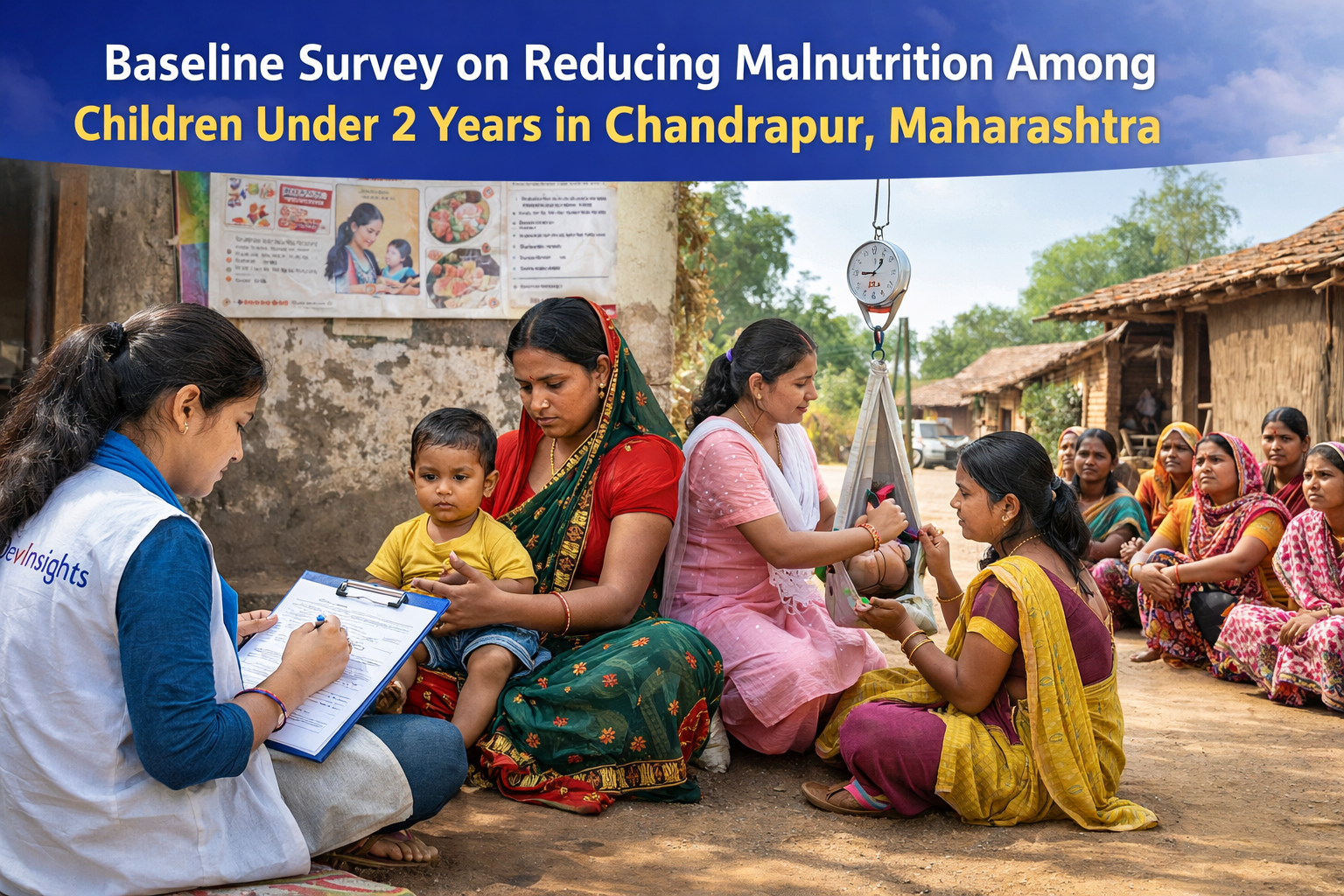
Baseline Survey for Project Aimed at Reducing Malnutrition among Children Under 2 Years in Chandrapur, Maharashtra
Client: AIFT
State Covered: Maharashtra
Districts: Chandrapur
Duration: Jan 2026 – Mar 2026 ( 2.5 months)
DevInsights conducted a baseline survey for a multi-year nutrition intervention led by American India Foundation Trust (AIFT) and Plan India in Chandrapur district, Maharashtra, aimed atreducing malnutrition among children under two years of age. The programme focuses on improving maternal and child nutrition practices, enhancing utilisation of health and nutrition services, and addressing key household-level determinants of undernutrition across semi-urban, rural, andtribal settings.
The study adopted across-sectional mixed-methods approach, covering three blocks Chandrapur, Bhadravati, and Rajura. Quantitative data were collected through 1,000 structured interviews, including 800 caregivers of children aged 0–23 monthsand 200 lactating mothers. A sub-sample of 400 children underwent anthropometric assessment following WHO protocols to generate key indicatorssuch as weight-for-height (WHZ) and weight-for-age (WAZ). The sample was drawnfrom 60 villages using the WHO 30-cluster sampling methodology, with representation across intervention and comparison areas.
The qualitative component comprised 180 semi-structured interviews with pregnant women and adolescent girls to explore behavioural drivers, social norms, service access, andbarriers influencing nutrition outcomes.
The baseline study established critical benchmarks on child nutritional status, maternal knowledge andpractices, service utilisation, and socio-economic factors. DevInsights managedend-to-end execution, including sampling design, tool development andtranslation, field team training, data collection supervision, and rigorous data quality assurance. Advanced statistical and thematic analyses were conducted using SPSS/STATA and qualitative methods, generating actionable evidenceto inform programme implementation, strengthen monitoring systems, and support future impact assessment.


