

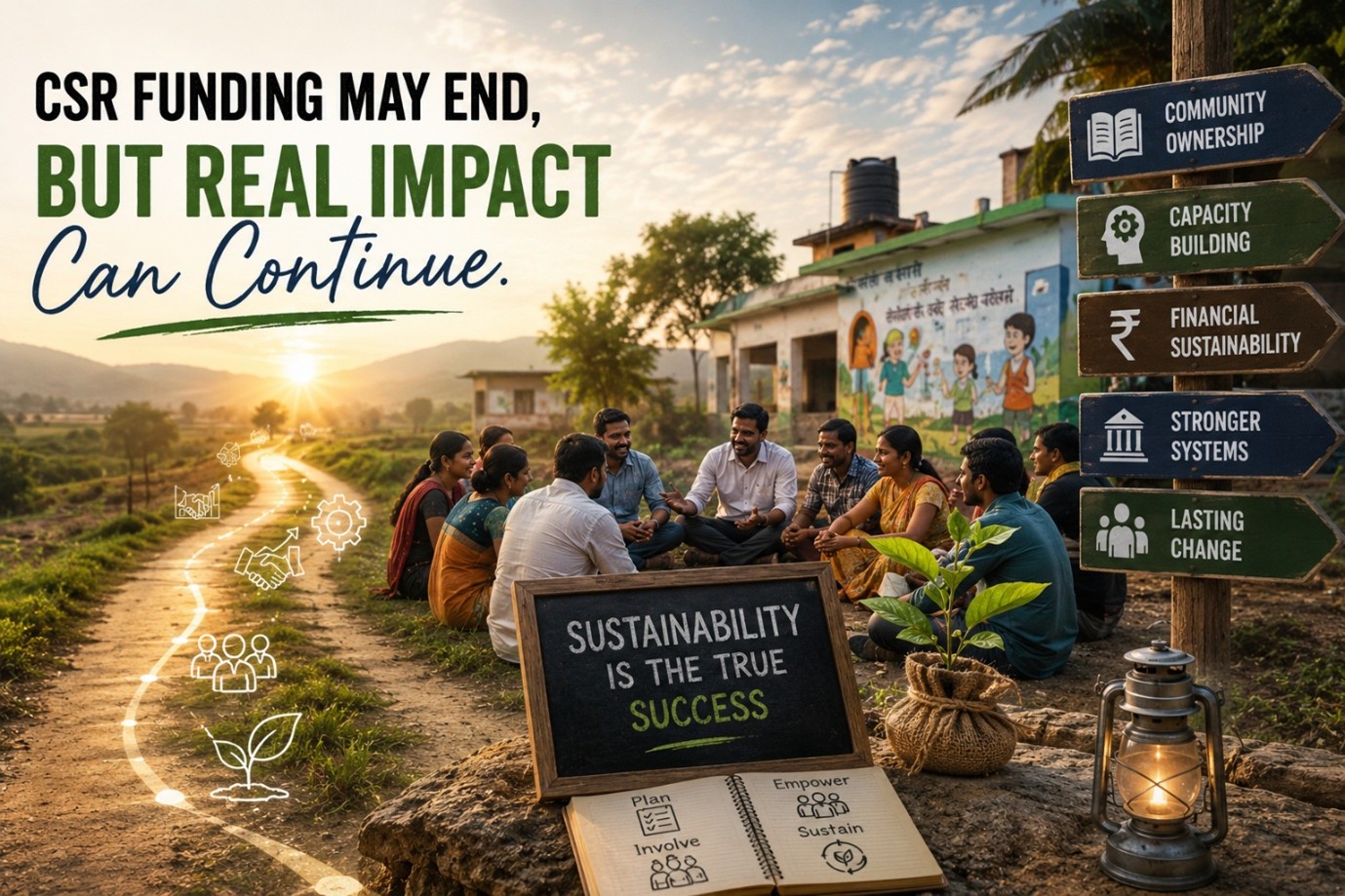
When CSR Funding Ends, Can the Impact Continue?
When a CSR project has come to its conclusion, this does not mean that everything has been completed. On the contrary, this is the moment when the true worth of the project starts showing. As for the project team, it can feel proud having achieved set goals, submitted the report and conducted all the necessary activities, but the following question still needs to be answered. What will happen once the project funding has run out? Will the positive effects continue? Is it possible for communities to take the project ahead and implement it themselves? The answer to this question shows the value of the CSR project.
Many CSR projects emphasise achievements such as the number of schools repaired, farmers trained, health camps organised, or trees planted. While these are important outputs, they do not necessarily reflect the actual impact of an intervention. For example, repairing a school building creates value only if it leads to improved student attendance, retention, or learning outcomes. Similarly, training farmers is meaningful only if they adopt improved agricultural practices that result in higher productivity or increased household income. Likewise, a drinking water system can be considered successful only if it remains functional and continues to provide safe water to the community over the long term.
Communities Must Own the Change
Some of the major learnings about the success of a CSR initiative include the need for the community to own the process. The involvement of the community as partners rather than simply being the beneficiaries can be seen as a key success factor. When the community becomes part of identifying needs, decision-making processes, and management of resources within the community itself, it becomes much easier for them to sustain the gains made by the initiative. A community that manages to take ownership of its water resources or the livelihood initiatives by women on its own is an example.
Capacity Building Creates Lasting Impact
Buildings, machines, and infrastructural elements are crucial, but they alone cannot bring about change. Sustainable development is dependent on the capacity of people who know how to maintain them. To establish a successful digital classroom, one needs teachers capable of working with technological advancements. Similarly, better farming methods will only prove to be effective once the farmers adopt them. It is also essential that the health campaigns keep making a difference in the lives of people only once they have the capacity to carry out their mission within their community. Through this, CSR programmes can establish the necessary leadership through their people.
Planning for Financial Sustainability
Many well-meaning projects tend to fail when the source of funding dries up because there was no provision for maintenance costs. Community assets need to be maintained, repaired, and, in many cases, replaced. If this is not done, even the most successful programs will slowly become useless. The setting up of maintenance funds, engaging communities to pay wherever necessary, linking the people benefiting from government programs, and making access to financial services easier are realistic means of sustaining projects. Sustainable development entails both asset creation and sustenance.
Working with Government Systems
CSR activities are likely to bear more fruit if they are integrated into ongoing government schemes rather than acting independently of them. The collaboration between CSR programs and public institutions ensures that the benefits enjoyed by the community will continue even after the program has ended. Regardless of whether the activity involves the improvement of Anganwadi Centres, government schools, primary healthcare or agricultural extension programs, a synergy between CSR programs and public structures enhances effectiveness and sustainability.
Learning After the Project Ends
Many organisations end monitoring once a project is completed. However, the most valuable learning often comes after implementation. Revisiting communities one or two years later helps assess whether outcomes have been sustained—for example, whether water systems remain functional, self-help groups continue to operate, or farmers still use improved agricultural practices. Several Indian CSR programmes, including initiatives by Tata Steel and HDFC Bank, have highlighted the importance of post-project assessments in understanding long-term sustainability and improving future interventions.
Common Challenges to Sustainability
However, not all CSR initiatives survive beyond the initial funding period. For example, community water purification plants or digital learning centres established under CSR projects have, in some cases, become non-functional due to inadequate maintenance, lack of local ownership, or limited funds for operations. Similar challenges arise when trained personnel leave or community institutions are unable to sustain project activities. These examples highlight that sustainability does not happen automatically it requires long-term planning, community ownership, and continued institutional support.
Conclusion
Currently, the goal of CSR lies in delivering tangible social results. But the biggest sign of success will not be the implementation of projects; rather, it will be their sustainability. Projects that engage communities, develop institutional capabilities, stimulate local ownership, and establish sustainable structures will create something bigger than just the funding cycle. At the end of the day, the most successful CSR programs will be those which make themselves redundant, since the local community will know how to take the lead from thereon.