
.png)
From Anganwadi to Evidence: Strengthening CSR Impact in Nutrition Programmes
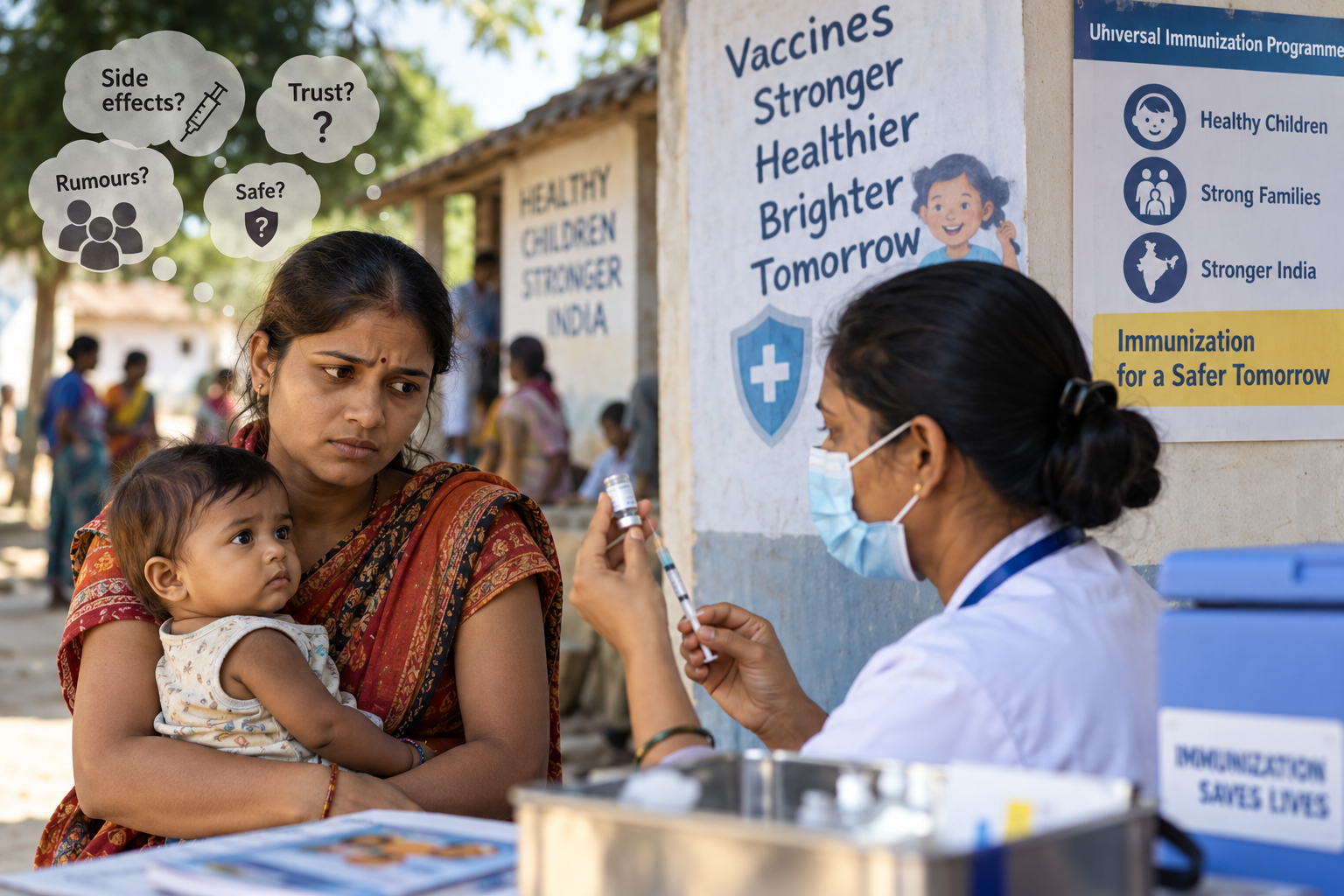
Nutrition in India is often talked about through schemes, numbers, and delivery systems. But for most families, it feels far more immediate than that. It shows up in everyday questions whether a child is growing as expected, whether a mother is able to manage feeding along with everything else she does, or whether anyone is actually there to guide them when needed. The early years matter a lot here. What happens in this phase doesn’t just stay in childhood it shapes health, learning, and even future opportunities.
India has tried to respond to this through large systems like the Integrated Child Development Services (ICDS). At the centre of this are Anganwadi centres, which are meant to connect policy with real households. The intent is strong. But what happens on the ground is not always that straight forward.
The Paradox of Scale in India’s Nutrition System
India delivers nutrition programmes at a scale that is hard to match. Anganwadi centres are spread across most areas and take on several roles from providing supplementary nutrition to tracking child growth and supporting caregivers.
In principle, such wide coverage should lead to stronger outcomes, but statistics paint a different story. Data from the National Family Health Survey-5 shows that most of the eligible children have accessed at least one ICDS service. At the same time, it also reports that 35.5% of children under five are stunted and 32.1% are under-weight (Ministry of Health and Family Welfare, n.d.).
So, while services are reaching people, outcomes are not improving at the same pace. This gap between reach and results is where things start getting complicated.
The Gap Between Delivery andImpact
In practice, nutrition is shaped by many overlapping factors. Families deal with irregular incomes, migration, time pressures, and existing food habits. All of this affects how, and how consistently, services are actually used.
Most programme data, however, tends to focus on delivery what was provided, how often, and to how many people. What it doesn’t always capture is what happens after that. Research using NFHS data indicate that consistent utilisation and service quality have a stronger association with improvements in child nutrition than access alone (Singh, 2024).
This points to a deeper issue. The gap is not just about implementation it is also about what we are able to see and understand. Many of these realities only become visible when programmes are observed closely on the ground. With out that perspective, it becomes easy to respond to visible gaps while missing what actually drives them.
Where CSR Enters the Nutrition Conversation
Over time, CSR has started playing a bigger role in nutrition. Many organisations now support programmes that align with national priorities, especially in areas where public systems are stretched. As CSR involvement in nutrition has grown, concerns about how effective these efforts really are have also come up. Many initiatives still focus on visible outputs things that are easier to report but these don’t always connect to long-term outcomes. In an area as complex as nutrition, this can make it harder to learn from experience and adjust approaches over time. The challenge is that nutrition outcomes don’t change that quickly or visibly. So, while activity levels may look high, long-term impact is harder to track.
Shifting the Focus from Activities toLearning
Nutrition outcomes evolve over time and are shaped by multiple, interdependent factors. This makes evidence central to effective programme design and implementation. Evidence allows organisations to identify where assumptions break down, where delivery mechanisms fall short, and where course correction is needed.
For CSR-supported nutrition programmes, learning-oriented approaches create space to move beyond static plans. They support adaptation during implementation, encourage alignment with public systems, and strengthen accountability to communities rather than only to reporting frameworks.
Evidence as a Shared Language Across Systems
Anganwadi centres operate at the intersection of different stakeholders’ government systems, communities, and external partners. When CSR initiatives use very different ways to track success, it can create gaps and overlap in efforts. Having some shared way of looking at evidence makes it easier to coordinate and avoid working in silos.
In that sense, evidence is not just about measurement. It becomes a way for different stakeholders to stay on the same page.
The Quiet Role of Knowledge Partners
As CSR moves toward outcome-oriented engagement, the role of research and advisory organisations becomes increasingly important. Acting as knowledge partners, these organisations support the generation, interpretation, and use of evidence across programme cycles.
Organisations such as DevInsights serve as strategic knowledge partners across nutrition, health, education, livelihoods, and governance, embedding evidence into programme design and adaptive learning processes.
Looking Ahead: Making Evidence Central toNutrition Impact
At this stage, the issue is less about whether systems are in place, and more about how well they respond to real-life conditions.
For Anganwadi services, this means staying closely connected to how families actually experience these programmes. For CSR-supported efforts, it means treating evidence as something that informs decisions not just something that is reported.
Ultimately, strengthening this link between services and evidence is about ensuring that investments translate into real improvements healthier children, more confident caregivers, and stronger nutrition systems overall.
References
Ministry of Health and Family Welfare, G. o. (n.d.). All India and state/UT-wise factsheets: National Family Health Survey (NFHS-5), 2019–21. Retrieved from Data.gov.in: https://www.data.gov.in/resource/all-india-and-stateut-wise-factsheets-national-family-health-survey-nfhs-5-2019-2021?utm
Singh, S. K. (2024). Utilization of Integrated Child Development Services (ICDS) and its linkages with undernutrition in India. . https://doi.org/10.1111/mcn.13644 .