
Where Data and Purpose Cross Paths: The Unnoticed Role of AI in the Social Development Sector
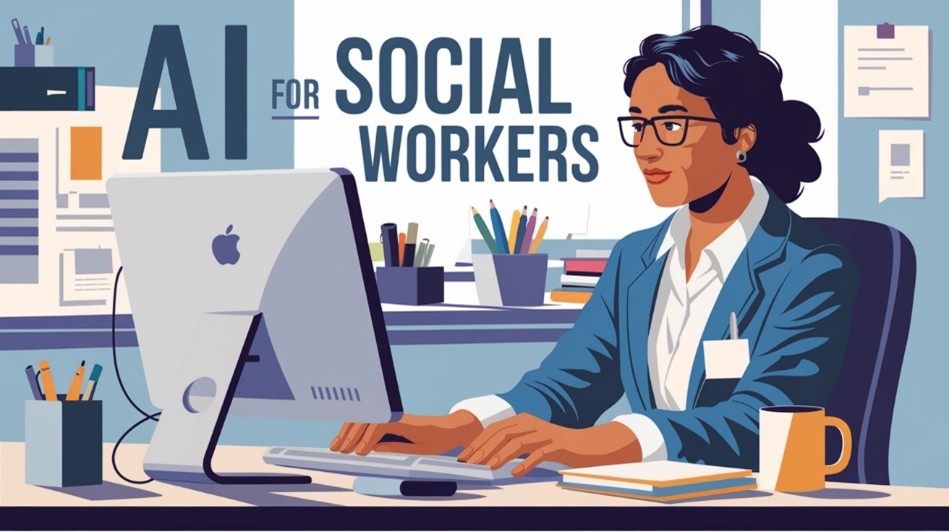
An unassuming revolution is taking place among NGOs, government social welfare agencies, and development organizations around the world, including in India. It may not seem groundbreaking. It could be an example of a field officer writing his report for the month in twenty minutes instead of spending three hours on it, or abeneficiary living in rural Rajasthan accessing crucial information about government schemes in her own language without having to travel to a district office.
This is how AI is currently shaping the social development sector.
Social Development Information Gap
In order to propose the best possible solutions, we first need to consider the challenges that social development organizations face. The most common challenge is one of working in an environment where information is abundant but insights are sparse. The organizations collect huge quantities of information about people they support: surveys of households, beneficiary information, field notes, attendance records, and payments for social services. However, all that information rarely gets analyzed – the spreadsheets are left unanalyzed, the reports become irrelevant before anyone can read them, and the information remains closed to the communities they represent.
That happens not because of lack of will but because of systemic problems. The workers in the field are overworked, reporting periods are set inflexibly, and the people with expertise in analyzing information have no time for translating findings into action.This is especially challenging in a resource-limited setting where inefficiencies cost more than mere wasted resources, the opportunity costsinclude failing to help people when we could help.
In the world where AI technologies could dramatically change social services delivery and make sure that the people receive the correct benefits from it, it becomes necessary for social development practitioners to find a way to work with AI.
Applications of AI in Practice
Automating Monthly Reports: When you ask an NGO's program manager what their most time-consuming activity is that they wish they had time for their core program activities, you will find out that reporting is always one of them.
Manual data collection, reconciliation, formatting of data, and summarizing it based on donor templates is one aspect of the reporting process that was always laborious and time-consuming. However, while it may be required at this point, not every thing should be manual anymore.
Modern AI solutions can automatically compile data collected from field surveys, attendance, financial reports, and other sources; create a draft report based on underlying data and point to the unusual values; and generate dashboards in real-time. What used totake a whole team a few days to do can now be done in a few hours with humans interpreting data rather than compiling it.
Organizations across the globe already use AI technology to categorize unstructured data and automate the processes of creating reports.
Making Information Availableto Communities
Information access goes beyond providing improved reporting mechanisms at headquarters, it means providing accurate and timely information to the right people.
By 2026, it is expected that Indic Large Language Models will cover all Indian language plans, with edge-based artificial intelligence allowing local multilingual and multimodal inputs. In this way, users can use digital tools using their local dialects. Inan industry that operates in some of the most linguistically diverse communities in the world, this represents a game changer. For example, a chatbot offering an explanation of the welfare scheme provided by the government in Bhojpuri or a voice interface assisting a first-time smart phone user through a process of applying for a welfare program in Chhattisgarhi is no luxury, it is an essential tool.
IndiaAI's Mission, with the help of its working group "AI for Economic Growth and Social Good, "recognizes the potential in this regard.
Facilitating MEL In organizations focused on their impact and performance, artificial intelligence has been seen playing a major role in MEL activities. This happens as AI can close the existing gaps through recognizing patterns in data sets and finding out what kinds of program elements result in better outcomes and even predict possible interventions before it fails to deliver its promise.
DevInsights, a company with expertise in RMEL, focuses on exploring how technology can assist development organizations in taking informed decisions about their programs. Having worked in over 29 states and union territories of India and managed more than 150 different programs in areas of education, public health, livelihoods and so forth, DevInsights is well versed in the peculiarities and problems associated with data analysis in such organizations. The approach adopted by DevInsights of using data for decision making becomes the perfect platform for implementing AI into action.
Policy Momentum in India
India is actively working to wardsusing AI in social good, with significant policy development. The Roadmap on Artificial Intelligence for Inclusive Societal Development from the NITI Aayogis a very ambitious but realistic plan. The idea is that technology cannot solve the problem on its own; there needs to be a coordinated effort between policy and humans if we are to see an effect that reaches beyond exclusive spheres. Thus, through the Mission Digital ShramSetu, NITI Aayog plans to create a world in which frontier technologies such as artificial intelligence, blockchain, and immersive learning are accessible to everyone, including informal workers.
The price of computing has gone down considerably since 2022, decreasing by over 280 times in just two years. Alongside the Make in India initiative, this resulted in an average reduction of hardware costs by 30% each year and an improvement in energy efficiency of up to 40%.
These changes are extremely important for the development sector, which struggles to make ends meet and, consequently, to implement any kind of expensive and proprietary technology. With the advent of affordable AI products, we now ask ourselves not if organizations can afford to adopt the technology but if they can afford not to.
Global Momentum
Momentum has been gained not onlyin India. The volume of AI projects conducted in the UN rose by 79% from 406 in 2023 to 729 in 2024, 84% of which address the SDGs. It is evident that development institutions are conducting large-scale experiments in using AI, and these experiments contribute to the creation of a practical experience basefor their application.
The global market for accessibility through AI is expected to expand from USD 4.2 billion in 2024 to USD 52.36 billion in 2034, registering a CAGR of 28.7%. The main factors driving this growth include Natural Language Processing technology providing the ability to transcribe, voice control, and language comprehension. It is noteworthy that market expansion is accompanied by true technological readiness for AI applications rather than purely commercial interests. What was just an experiment three years ago is becoming a real tool today.
Challenges Facing Honesty with AI Development
It would be dishonest to portray AI development in a completely positive light.
AI profiling and matching may create biases in their predictions or recommendations due to the algorithms replicating historical biases through data analysis or the use of proxy variables. To address this challenge, it is important to do proper testing, transparency and oversight in AI systems.
Quality of the data is another issue that may limit the potential of AI development. Although 80% of organizations think their data is AI-ready, almost all surveyed organizations face some problems with data in implementing AI, while half of them experience serious difficulties. In the case of development organizations that have been accumulating data inconsistently in many different tools and platforms over several years, becoming AI-ready means first working on data management rather than the AI solution itself.
Lastly, there is the matter of community autonomy. AI must serve to empower citizens by giving them more information and freedom of choice rather than making decisions on their behalfand without their consent. Fortunately, development organizations are ideally placed to respect this boundary since their fundamental values emphasize suchprinciples.
Implications of AI Practical applications of AI within an organization that concentrates on rural health would include an automatic flagging of villages with poor vaccination rates, allowing for more timely interventions. Within a livelihood project, it may consist of a chatbot that would help loan recipients learn about available loansin their native language, without needing human help available at all times. With a governance initiative, it may be an analytics platform that would help governmental partners assess which areas have effective service delivery and which don't.
In DevInsights, an organization concentrating on issues of public health, nutrition, education, gender, livelihoods, WASH, child protection, governance, and climate change, one finds the intersection between data analysis and real-world needs. All MEL initiatives, capacity building efforts, and CSR consultancy offered by the company wouldgreatly benefit from AI technologies in tandem with their human component.
It is essential to make the distinction. While the best possible implementation of AI would not allow forautomation of the human intuition that makes this sector so valuable, rather than that, it would ensure the ability to use human resources to focus on what machines cannot accomplish, gaining community trust, understanding the nuancesof cultural context, and assessing data ethically.
Looking Ahead
However, there is currently anopportunity for the sector, whereby AI technologies are becoming cheaper and easier to access and there exists a favourable policy environment for implementing AI within the sector. What remains is building organisational capacity, developing robust data systems, and maintaining the value orientation of the social development sector. For example, the use of AI advisories by organizations like Digital Green have improved agricultural extension efforts. Similarly, Pratham has leveraged adaptive learning technologies to improve foundational educational outcomes.
In itself, AI will not solve the problem of poverty. However, it will help to make processes efficient andevidence-driven. The following are some of the things that organizations need to do to leverage the full potential of AI. They should focus on good data,staff capacity, ethics, and a problem first approach to technology.
References
- IndiaAI Mission. AI for Economic Growth and Social Good Working Group. India AI Impact Summit 2026. https://impact.indiaai.gov.in/working-groups/ai-for-economic-growth
- NITI Aayog. Roadmap on AI for Inclusive Societal Development. Government of India, 2025. https://niti.gov.in/sites/default/files/2025-10/Roadmap_On_AI_for_Inclusive_Societal_Development.pdf
- Brioscú, A. et al. (2024). Harnessing Artificial Intelligence in Social Security. OECD Publishing, Paris. https://www.oecd.org/en/publications/harnessing-artificial-intelligence-in-social-security_b52405c1-en
- OECD. Leveraging AI to Make Social Services More Responsive: Insights from Hamburg. OECD Events, 2025. https://www.oecd.org/en/events/2025/05/Leveraging-AI-to-make-social-services-more-responsive--Insights-from-Hamburg.html
- ScienceDirect. AI Applications in Social Development. https://www.sciencedirect.com/science/article/pii/S2667096824000399
- United Nations Department of Economic and Social Affairs. UN Activities on AI Report 2024. Second World Summit for Social Development, 2025. https://social.desa.un.org/world-summit-2025/blog/un-activities-on-ai-report-2024
- Market.us. AI in Accessibility Market Size and Share, 2024 to 2034. https://market.us/report/ai-in-accessibility-market/