
Vaccine Hesitancy in India: The Gap Between Access and Acceptance
India is known for having one of the largest immunization programs in the world. This program provides free immunizations against 12 preventable diseases to nearly 26 million babies and 29 million pregnant women every year through the Universal Immunization Programme. There are remarkable achievements in India's immunization program, such as eradicating polio in 2014. Nonetheless, despite having such a huge program in place, India's children are still under-immunized, but not because of the unavailability of vaccines.
A gap that logistics alone can't explain
According to the National Family Health Survey-5 (NFHS-5), the overall immunization coverage in India stands at 76.4 percent, a significant improvement compared with ten years ago. However, this statistic fails to reflect substantial disparities across various regions. In several disadvantaged rural areas, almost four out of five caregivers are hesitant about vaccinating their children. There are also substantial disparities in the tribal population, where immunization coverage is very low, ranging from 31 to 89 percent depending on the region; the national average is only 56 percent, and even in the state of Maharashtra, coverage is just slightly above 50 percent.
Nevertheless, this problem cannot be attributed to any lack of access or insufficient health facilities. The Indian government has allocated great resources into serving disadvantaged populations: Mission Indra Dhanush, created in 2014 to increase vaccine coverage among remote rural areas, slum areas, migrants, and hilly areas, increased coverage by 6.7 percent, and intensive follow-up was designed to ensure 90 percent coverage in those districts where it was persistently low. What is still lacking is trust.
What's actually driving hesitancy on the ground
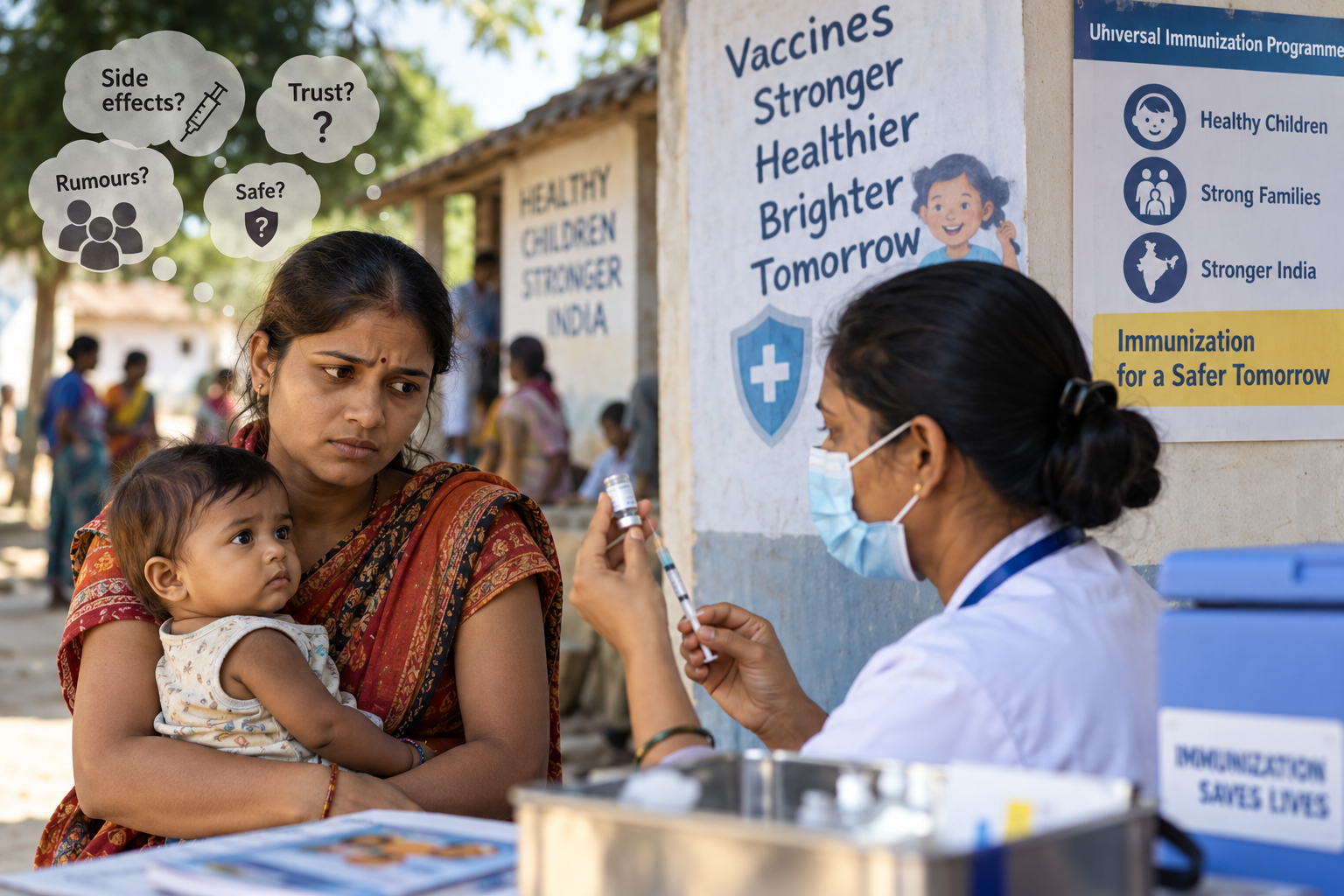
Research into the underlying causes of vaccine hesitancy in India reveals a slightly different picture compared to a mere lack of knowledge. For example, qualitative research among people working in the Indian government and in civil society who were involved in the planning and implementation of the Indian immunization campaigns revealed vaccine hesitancy as a complex issue, affected not only by the availability of vaccines but also by distrust, rumours, and experience. Mixed methods research conducted after the Measles-Rubella campaign held in 2017 in rural Puducherry showed that 14 percent of parents had vaccine hesitancy caused by issues that emerged during the campaign.
The COVID-19 pandemic further highlighted these trends. Despite having distributed more than two billion doses of the vaccine and fully vaccinated about 900 million individuals by September 2022, close to a quarter of Indians have still not been vaccinated, which the researchers did not link with problems with logistics, but with deeply entrenched mistrust, misperceptions, and scepticism of the vaccine itself and of those who encourage its usage. Several studies have found that, in many cases, hesitancy regarding the COVID-19 vaccine and hesitancy regarding routine childhood immunization do not correspond with each other; communities and even individual caregivers have completely different attitudes towards the new vaccine compared to an established one.
Where hesitancy concentrates — and why it matters
The populations that suffer from high hesitancy levels tend to be those who are the least served by the general health system, including tribal populations, migrants, and inhabitants of slums. This relationship is significant because it suggests that vaccine hesitancy in India does not operate in isolation but is connected to broader gaps in maternal health and nutrition services and is likely driven by the same underlying factors that underlie other health disparities in such populations.
The role of faith leaders and community messengers has become significant in several documented intervention programs. Studies on vaccine acceptability in rural areas reveal that involving faith leaders as messengers increased acceptance rates in communities that had not gained trust through the public health message alone. This reflects the global trend that institutionalized vaccine distrust is more receptive to messengers from within rather than top-down public campaigns.
What the development sector can actually do
For organizations working in maternal and child health, there are three clear lessons from the research. First, it must be accepted that hesitancy is not the same everywhere; the concerns that cause a tribal population to be hesitant towards routine immunizations are very different from those that made urban populations hesitant during the COVID-19 vaccine rollouts. Second, health workers in the field require regular training in a specific region, not sensitization, because organizations working at the grassroots level have discovered that providing ASHA workers and Anganwadi workers with training to counter the specific hesitancies faced in their local areas, instead of just providing general messaging, is key to building family trust. Third, community-embedded messengers are far more effective than organizational messages.
India's immunization framework is one of the most comprehensive in the world. The deficit lies not in getting vaccines into the villages but in restoring the local trust needed to use them. It will decide whether India's future gains in immunization will be like its past or whether India finally closes the gap for those children who are missed out on today.