
How AI Can Improve Social Protection and Welfare Delivery in India
There's a particular kind of frustration familiar to anyone who has tried to access a government scheme in India, the missing document, the office that's closed for lunch, the form that needs a signature from someone three villages away. For decades, this friction has quietly decided who actually receives welfare and who gives up trying.
The Scale of the Problem and the Promise
India runs one of the largest welfare architectures on earth, built on what's often called the JAM trinity, Jan Dhan bank accounts, Aadhaar identity, and mobile connectivity. This databased system underpins the administration of pensions, subsidised food, housing schemes, and agricultural loans for millions of people who rely on government assistance. Layered on top of it, Direct Benefit Transfer has grown into a genuinely enormous machine: as of 2025, it spans 1,206 central and state schemes, moving benefits like PM-KISAN payments, MGNREGA wages, pensions, and scholarships directly into people's bank accounts.
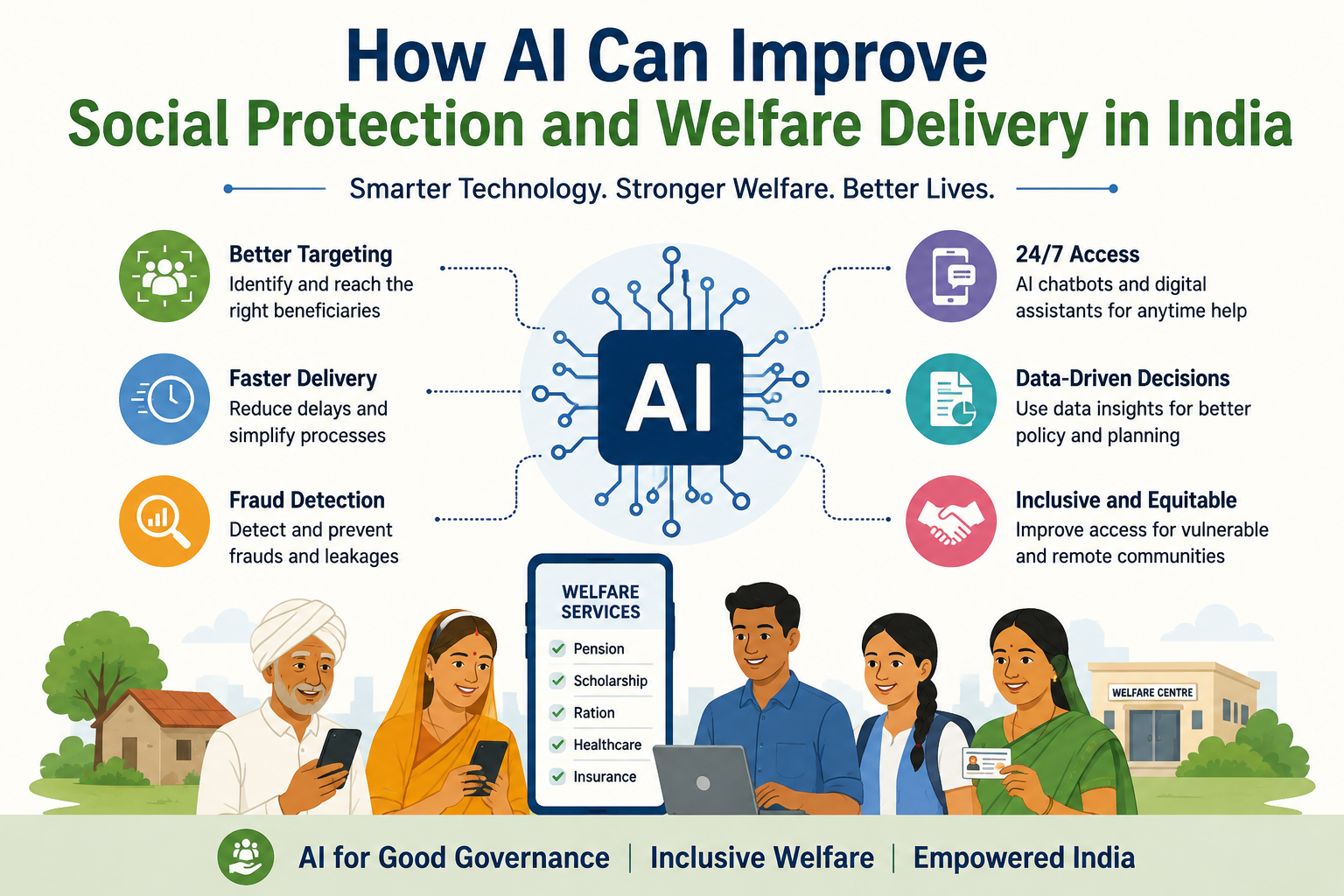
AI's most obvious job in this system is finding the people the system has missed. Millions of eligible households never apply for a scheme simply because they don't know it exists, or don't know they qualify. Civic-tech platforms have started using AI to close exactly that gap cloud-based tools that scan a citizen's basic details against thousands of scheme criteria and tell them, often for the first time, what they're entitled to. Similar tools are emerging to help vulnerable groups more directly: AI-enabled platforms are now connecting women and children facing poverty, violence, or social marginalisation with nearby support services, addressing the fact that many people who need help most are the least equipped to navigate the paperwork required to ask for it.
There's also a quieter, less glamorous use of AI that may matter more in the long run: cleaning up the data itself. Duplicate ration cards, dead beneficiaries still drawing pensions, one person registered under five different names these aren't edge cases in a system this size, they're structural. Analytics and machine learning are being used by state governments to spot these patterns and tighten beneficiary rolls, so a rupee meant for a poor household actually reaches one, rather than leaking into a fraudulent or duplicate account.
Where the Promise Gets Complicated
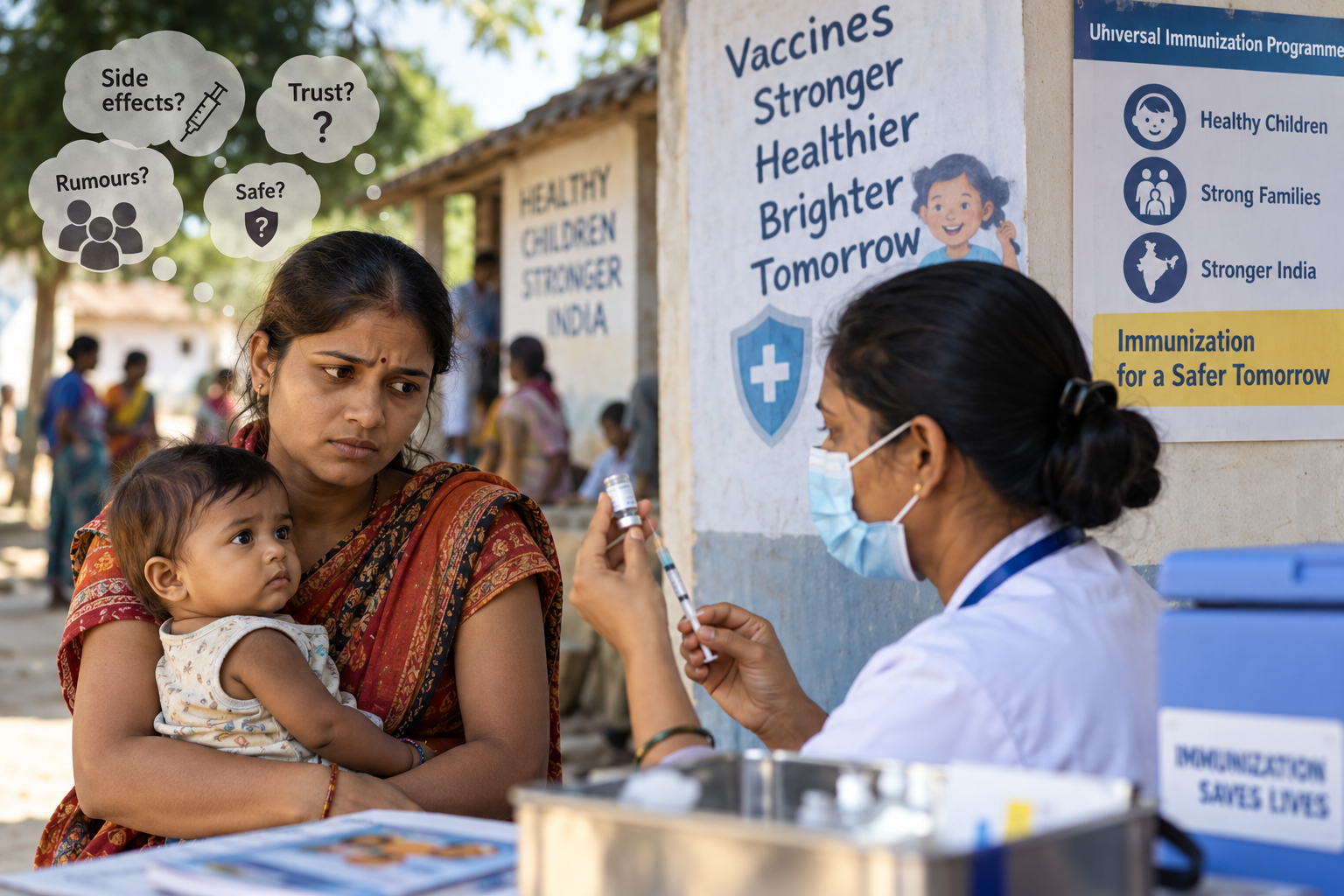
But every efficiency gain in this story comes with a cost that tends to land on the people the system was built to protect. The clearest example is facial recognition, increasingly used to verify identity before benefits are released. It sounds like a small technical upgrade swap a fingerprint scan for a face scan but in practice it has already excluded real people from real entitlements. In schemes covering child nutrition, Aadhaar-linked facial verification is now used routinely, even though children too young to hold an Aadhaar card must be verified through a parent's face instead. In Bihar, Jharkhand, and Karnataka, cases have emerged where a mother's live photo simply didn't match her old database image closely enough, and her child was quietly dropped from the rolls. By the end of 2025, only about 52.7 percent of eligible beneficiaries were actually receiving their rations under one such nutrition scheme a gap that official data doesn't even break down by how many of the excluded were children.
This isn't an isolated glitch. It points to a deeper problem with algorithmic welfare systems: they don't fail evenly. A facial recognition system trained mostly on certain skin tones, lighting conditions, or age groups will make more errors on people outside that range and in a welfare system, an "error" isn't an inconvenience, it's a missed meal or an unpaid pension. Telangana's experience with an automated eligibility system called Samagra Vedika offers a harder lesson still. An investigation found that people had lost access to essential social protection schemes after the system, which pulls together data from multiple sources to assess eligibility, was rolled out a case study in how automation designed to catch fraud can end up catching the innocent instead, with almost no way for someone wrongly excluded to know why, or how to appeal.
That last part is the crux of the privacy and exclusion debate. Most of these systems make decisions that are functionally invisible to the person affected. A beneficiary doesn't get a rejection letter explaining that a face-match algorithm flagged a discrepancy they simply stop receiving what they're owed, and are left to figure out why through a bureaucracy that is often just as opaque as the algorithm itself. Add to this the sheer scale of personal data these systems pool together biometric, financial, and location data on hundreds of millions of citizens and the risk isn't hypothetical. A data breach or a misused dataset in a system this size doesn't affect a few thousand people; it potentially affects everyone enrolled.
Building AI That Doesn't Leave People Behind
None of this argues for abandoning AI in welfare delivery the scale of India's population makes some form of automation almost unavoidable. It argues for building it differently: keeping a human fallback for every automated decision, so a mismatched face or an inconsistent record doesn't become an automatic denial; publishing exclusion data as openly as inclusion data, so gaps like the one in nutrition coverage are visible and fixable rather than buried in aggregate statistics; and designing outreach tools with the same urgency currently reserved for fraud detection, rather than treating access as an afterthought to enforcement.
Voice-based AI systems that work in local languages, hyperlocal platforms that route people toward services near them, and simple eligibility-matching tools all point toward a version of AI that expands access rather than narrows it. The technology itself isn't the deciding factor. What decides whether AI strengthens India's welfare state or quietly erodes it is a much older question: whether the system is built to find people, or built to filter them out.
References
1. ORF Online — "AI in Welfare Systems: Rethinking Facial Recognition in India's Welfare Delivery,"
2. Amnesty International — "Use of Entity Resolution in India: Shining a light on how new forms of automation can deny people access to welfare,"
3. Times of Oman — "How India is using technology and AI to deliver welfare as a constitutional guarantee,"